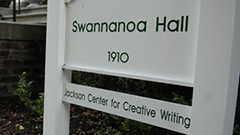
This well-funded two-year creative writing M.F.A. program, whose home is the Jackson Center for Creative Writing, emphasizes an individualized approach. To the twenty Creative Writing M.F.A. students enrolled in the program, books are essential nourishment, and reading them is inextricable from writing them.
The creative writing (M.F.A.) students, like the professors, are unusually committed to a diversity of voices and literatures, contemporary and across the ages. They work successfully in and across every genre, including poetry, short fiction, novels, and creative nonfiction.
Students and professors at Hollins enjoy an intimate, supportive community with amazing guest readers and opportunities for editorial experience, introducing and giving public readings, writing-based service work in the community, travel and research funding, and time to read and write.
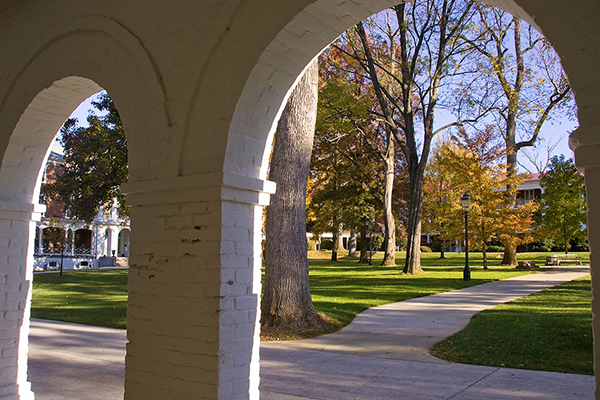
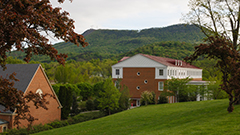
In addition, our beautiful location in Roanoke, Virginia offers an excellent setting to recharge, with the city’s small-scale, bustling culture, where it’s easy to explore the wildness of the Blue Ridge and Allegheny Mountains right from your door.

Courses and Curriculum
Hollins is a place for writers who want to write in the context of literature past and present. We enable a serious writer to work in an open-minded atmosphere, while at the same time developing his or her knowledge of contemporary literature, where it comes from, and how it works. Forty-nine credits in residence are required for the M.F.A. degree. Each student will undertake ten four-credit courses, plus a thesis (nine credits): four semesters of Graduate Creative Writing Tutorial, two semesters of Advanced Creative Writing Seminar, and electives which include literature and craft-study courses.
Examples of Classes in our Creative Writing program:
ENG 501: Graduate Creative Writing Tutorial
Graduate tutorial seminars in the form and theory of contemporary writing practice, with attention to the writing of the students in the class. The exact contents of any given seminar will be determined by the needs and interests of its members. Limited to graduate students in the creative writing program.
ENG 547: Studies in Short Fiction
Selected readings in the short story from masters to recent innovators, with attention to stories by women and the contemporary short-short story. Authors studied may include: Jhumpa Lahiri, Alice Munro, Gloria Naylor and Denis Johnson.
ENG 567: Cross-Genre and Experimental Writing
An examination of and practice in forms of writing that straddle and/or blend the worlds of fiction/poetry, image/word, fiction/nonfiction, and points between, including poetry, conceptual art, graphic memoir and fictional (auto)biography. Students will write concrete and prose poetry, flash fiction, fictional memoir, and experiment and redacted texts and their own invented forms, while considering a range of 20th-and 21st-century authors. Authors studied may include: Maggie Nelson, Carmen Maria Machado, and Alejandro Zambra.
ENG 582: Queering Nature in American Literature
This course engages the understanding that American discourse on nature naturalizes heteronormative national identities. Through the lenses of queer and environmental studies, we will examine how American writers from the 19th century to the present have dramatized the link between nature and sexuality through queer ecologies that challenge gender binaries and human exceptionalism.
ENG 585: Advanced Studies in the Novel
Studies in the form of the novel, ranging throughout the history of the novel. Close readings of a variety of novels with an effort to determine the demands of the form and ways in which it has been and can be developed. Authors studied may include: Leo Tolstoy, Virginia Woolf, Toni Morrison, Albert Camus and Annie Proulx. Special projects within the class may focus on a variety of topics. In recent years this has included graphic novels, mystery novels, and uses of surrealism.
ENG 586: Advanced Studies in Creative Nonfiction
This is a course on the literary form that has come to be known as “Creative Nonfiction.” We will read and discuss various modes of writing about personal experience and the aesthetic and ethical issues raised by such writing. Written assignments will include discursive prose, as well as students’ original creative nonfiction. Authors studied may include: Annie Dillard, James Baldwin, Mark Doty, and Anne Carson.

Meet our Creative Writing Faculty
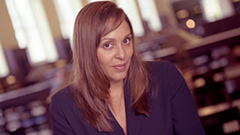
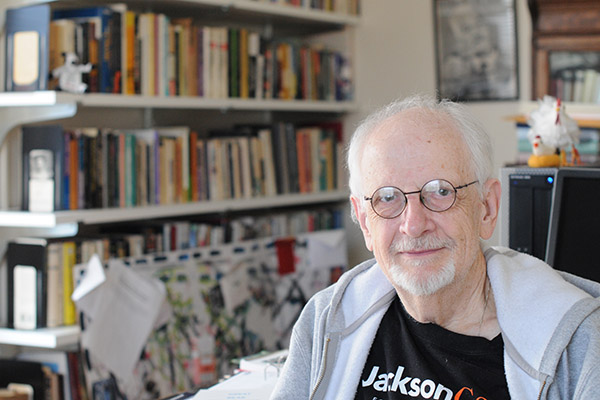
Our professors don’t just teach — they create. They’re accomplished, award-winning writers in their own fields — novelists, poets, essayists, short story writers, memoirists. They encourage students to hone their own distinctive voices in the company of practitioner faculty characterized by a genuine diversity of aesthetic approaches.


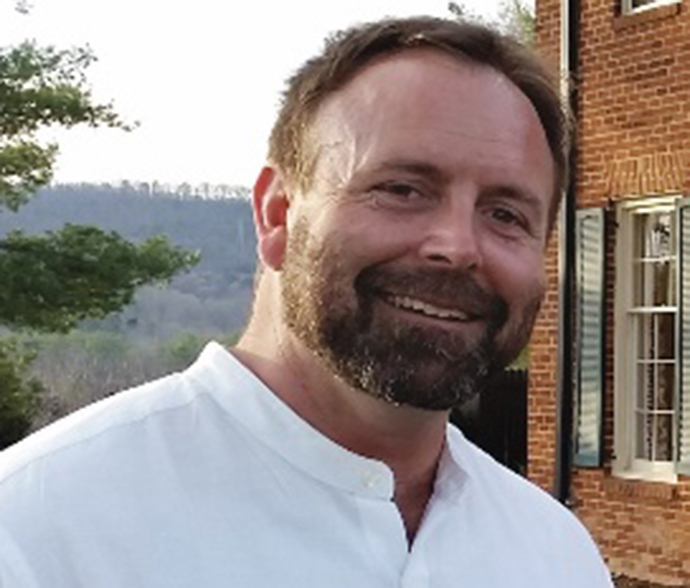


Louis D. Rubin Jr. Writer-In-Residence
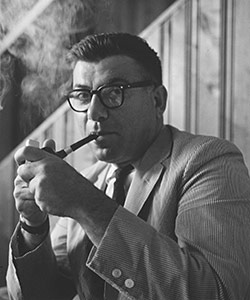
Each spring, Hollins hosts a distinguished writer-in-residence who works with graduate and selected undergraduate students. Louis D. Rubin Jr., the nation’s best-known scholar and publisher of southern literature, founded Hollins’ renowned creative writing program.

Lex Allen Literary Festival
The Lex Allen Literary Festival is an annual celebration of literary community hosted by the university in the spring. It is free and open to the public and features 3-4 visiting writers including our Writer-in-Residence. This festival curates an intimate space for students and community members to gather and discuss these authors’ works through Q&A and live interviews.
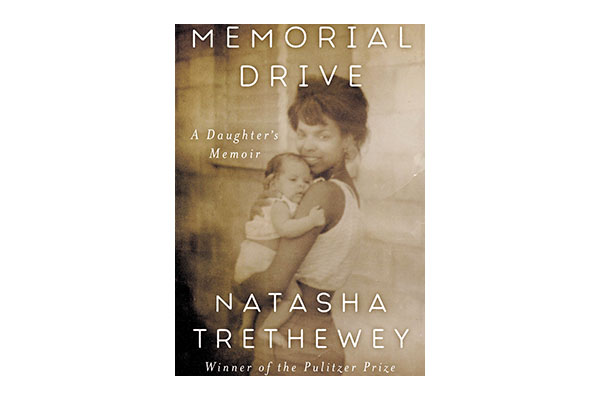
“The Roanoke Valley has a history of being writer-friendly, primarily because of the presence of Hollins University, which has been called ‘Pulitzer U.’ Annie Dillard, Henry Taylor, and most recently, U.S. Poet Laureate Natasha Trethewey have won the U.S.’s top writing prize.”
– The Roanoker Magazine


Great Authors Go to Hollins
The Hollins creative writing M.F.A. program has one of the highest publishing records of any graduate school in the country. Among the many outstanding writers who have graduated from the creative writing program are:
- Pulitzer Prize winners Annie Dillard, Henry Taylor, and Natasha Trethewey
- Novelists and story writers Madison Smartt Bell, Kiran Desai, Tony D’Souza, David Huddle, Adam Ross, and Jill McCorkle
- Poets and essayists Adrian Blevins, Jenny Boully, Scott Cairns, Wyn Cooper, Kevin Prufer, and Mary Ruefle
- Novelists and memoirists Richard McCann and Karen Salyer McElmurray
- Photographer Sally Mann
- Filmmaker George Butler
- Non-fiction author Beth Macy
Costs & FINANCIAL ASSISTANCE
Tuition
$23,600 for 2026-27
Fees
- New student nonrefundable deposit: $300 is applied toward fees
- Technology fee: $700 per year
- Health services: $410 per year
Financial Assistance
- All students receive funding from various endowed graduate scholarships, along with financial support for travel and research.
- Competitive graduate assistantships are also available.
- Teaching assistantships are awarded to four second-year students.